
Rahu Mandir Paithani History
Our Popular Puja & Anushthan
Get in Touch
For Puja bookings, temple visits, accommodation arrangements, or any other information, please feel free to contact us. Contact us today to get more information about your Puja or temple visit.
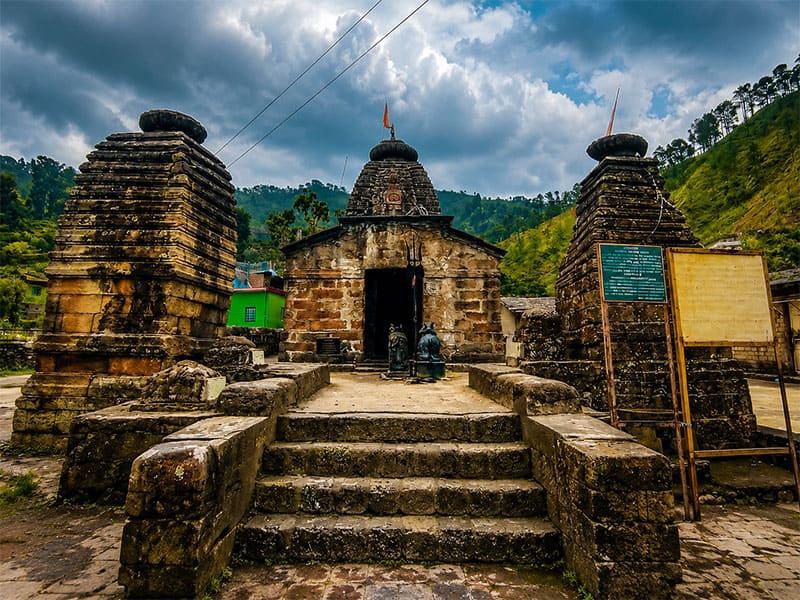
The Sacred History of Rahu Mandir Paithani
Rahu Mandir Paithani, located in the Pauri Garhwal region of Uttarakhand, is a distinctive Himalayan shrine associated with the worship of Rahu and Lord Shiva. Its history is closely connected with ancient religious traditions, local beliefs, Vedic astrology and the spiritual heritage of the Garhwal Himalayas.
Unlike many temples where Rahu is worshipped as part of a larger Navagraha arrangement, Paithani has developed a distinctive identity around Rahu worship. Over generations, devotees have continued to visit this sacred place for prayer, Rahu Puja, mantra chanting and traditional religious rituals.
The history of the temple is best understood through three interconnected layers: mythological tradition, local religious beliefs and the historical heritage of the temple structure itself.
The Mythological Connection Between Rahu and Paithani
The story of Rahu is associated with the famous Hindu tradition of Samudra Manthan, or the Churning of the Ocean. According to Hindu mythology, an asura named Swarbhanu disguised himself as a deity in an attempt to obtain the nectar of immortality. When Lord Vishnu discovered this, he separated Swarbhanu’s head from his body with the Sudarshan Chakra. Since he had already consumed the nectar, his head became immortal and came to be known as Rahu, while his body became known as Ketu.
According to a local religious belief associated with Paithani, after Lord Vishnu separated Rahu’s head from his body, his head fell in this sacred region. This belief is considered an important part of the special religious connection between Paithani and Rahu worship. Over time, this region became associated with the worship of Rahu as well as devotion to Lord Shiva.
This mythological tradition is also considered significant in understanding the special position of Rahu in Vedic astrology and Hindu religious beliefs. For this reason, devotees regard Paithani as a sacred place associated with Rahu Dev and visit the temple with faith for Rahu Puja, mantra chanting, and various traditional rituals.
Rahu's Tapasya to Lord Shiva
One of the most important traditions associated with the Rahu Temple Paithani is the belief that Rahu performed intense tapasya to Lord Shiva in this region.
Local traditions identify the sacred landscape around the confluence of the Rathvahini (Syali Gad) and Navalika (Western Nayar) rivers as the place connected with this spiritual practice. According to these traditions, Rahu’s devotion pleased Lord Shiva, giving the location a special religious significance.
Some sources connect this tradition with the Kedarkhand section of the Skanda Purana, where the region is associated with Rahu’s penance and the sacred area known as Rathkshetra. The village name Paithani is also traditionally connected by some accounts with Rahu’s gotra, described as “Paithinasi.”
These accounts form an important part of the local religious heritage of Paithani and continue to shape the way devotees understand the temple’s spiritual significance.
The Association of Rahu and Lord Shiva
A distinctive feature of Paithani’s religious tradition is the association of Rahu with Lord Shiva.
The temple is locally known as Rahu-ka-Mandir and has also been identified in scholarly documentation as Indreshvara-Mahadeva-Mandir. A study of important stone images from the Uttarakhand Himalayas records that a three-headed Hari-Hara image was observed at Paithani during an exploration in 1980. The image was found within the sanctum of the Shiva temple and was associated with the temple locally known as Rahu-ka-Mandir.
This historical observation adds an important dimension to the temple’s story. It shows that the religious identity of the site is not limited to modern references to Rahu worship, but is also connected with an older Shaiva temple tradition.
Traditional Accounts of Adi Shankaracharya
Another widely circulated tradition connects the temple with Adi Shankaracharya.
According to local accounts and several tourism sources, Adi Shankaracharya is believed to have visited this region and recognized the spiritual importance associated with Rahu. Some traditions further state that he initiated or contributed to the establishment of the temple at Paithani.
This account remains part of the temple’s oral and religious tradition. However, because definitive historical evidence establishing the exact role of Adi Shankaracharya in constructing the present temple is not readily available in the sources reviewed, it is more appropriate to present this as a traditional belief rather than an established historical fact.
The Ancient Temple and Its Architectural Heritage
The present temple is associated with the traditional architectural heritage of the Garhwal Himalayas. Its stone construction and Nagara-style characteristics reflect the broader temple-building traditions found across Uttarakhand.
The temple’s historical character is particularly significant because Paithani is not only associated with Rahu worship but also with an established Shiva temple tradition.
Historical documentation has identified the Paithani shrine as a Shiva temple containing an ancient Shiva Lingam, while the site is popularly known as Rahu Mandir among local devotees.
This combination of Shaiva heritage and Rahu worship is one of the features that gives Rahu Mandir Paithani its distinctive religious identity.
Paithani and the Sacred Himalayan Landscape
The geographical setting of Paithani has played an important role in the religious identity of the temple.
The shrine is situated in the Pauri Garhwal region, surrounded by the characteristic hills and valleys of the Garhwal Himalayas. Traditional accounts associate the sacred site with the meeting of local rivers, creating a landscape that has long been regarded as spiritually significant.
For generations, the natural environment, temple traditions and religious pracatices have developed together, making Paithani a place where Himalayan culture and Hindu spiritual traditions remain closely connected.
Rahu Worship Through the Ages
Rahu occupies a distinctive position in Vedic Astrology. Although Rahu is not a physical planet in the astronomical sense, it is traditionally regarded as a shadow planet or lunar node and forms an important part of the Navagraha system.
The religious significance of Rahu has led devotees to perform various forms of worship, mantra chanting and Shanti rituals. At Paithani, this tradition has continued through generations, with devotees visiting the temple with faith and performing prayers associated with Rahu Dosh, Rahu Shanti and Rahu Mantra Jaap.
The continuing practice of Rahu worship has helped preserve Paithani’s identity as an important Rahu-related pilgrimage destination in Uttarakhand.
Traditional Offerings and Religious Practices
Among the traditions associated with Rahu worship at Paithani is the offering of Moong Dal Khichdi as prasad. This practice is mentioned in several published accounts of the temple and has become one of the recognizable traditions associated with Rahu worship at the site.
Devotees also visit the temple for prayer, darshan, mantra chanting and traditional Rahu-related rituals according to their personal faith and religious requirements.
These practices have helped preserve the living religious character of the temple rather than allowing its history to remain only a subject of the past.
From Sacred Tradition to a Living Place of Worship
The story of Rahu Mandir Paithani is not limited to its legends or historical references. The temple continues to remain a living place of worship where devotees arrive with faith and personal prayers.
Today, visitors come to Paithani for Rahu Puja, Rahu Shanti Puja, Rahu Mantra Jaap, darshan and traditional Vedic rituals. The temple’s continuing religious practices connect present-day devotees with the traditions that have shaped the spiritual identity of the region.
The temple’s connection with Shri Hari Agastyeshwar Sanskrit Vidyalaya, Odali further strengthens its association with traditional Sanskrit education, Vedic learning and Gurukul culture.
Preserving the Vedic and Gurukul Tradition
The spiritual heritage connected with Rahu Mandir Paithani is also linked with the preservation of traditional Vedic knowledge.
Religious ceremonies and mantra chanting associated with the temple can be performed by the Batuk Brahmacharis of Shri Hari Agastyeshwar Sanskrit Vidyalaya, Odali, under the guidance of experienced Acharyas.
This creates a meaningful bridge between temple worship and the traditional Gurukul system, allowing Vedic mantras and Sanskrit learning to remain part of contemporary religious practice.
For devotees, a visit to Paithani can therefore become more than a temple visit. It can also provide an opportunity to experience the simplicity, discipline and spiritual environment associated with India’s traditional Gurukul heritage.
Rahu Mandir Paithani Today
Today, Rahu Mandir Paithani continues to attract devotees interested in Rahu worship, Vedic astrology, traditional Hindu rituals and the spiritual heritage of Uttarakhand.
The temple’s identity has been shaped by a combination of mythology, local tradition, Shaiva heritage, Vedic practices and generations of devotion.
Its location in the Pauri Garhwal Himalayas adds another dimension to the experience, offering visitors a peaceful setting away from the crowded pilgrimage routes of Uttarakhand.
For those searching for the Rahu Temple in Uttarakhand, Rahu Mandir Pauri Garhwal or a place associated with traditional Rahu Puja, Paithani represents a distinctive destination where faith and Himalayan heritage come together.
A Heritage of Faith That Continues
The history of Rahu Mandir Paithani is a living tradition shaped by mythology, local beliefs, temple heritage and continuing worship.
From the traditional story of Rahu’s tapasya to Lord Shiva and the enduring association of the site with Shaiva worship, Paithani carries a spiritual identity that has continued across generations.
Today, the temple remains a place where devotees can seek blessings, perform traditional worship and connect with the ancient spiritual traditions of the Himalayas.
Rahu Mandir Paithani is not simply a place remembered through history. It is a living centre of faith, Vedic worship and Himalayan spiritual heritage.
Purpose of Our Website and Its Contribution to Regional Development
The primary objective of developing this website is to bring Rahu Mandir Paithani, Maa Bunkhal Kalinka Siddhpeeth, Tara Kund Temple, and other important religious and natural attractions in the region to devotees and tourists through a reliable digital platform.
Through this digital platform, we aim to provide devotees visiting from different parts of the country with simple, reliable, and useful information about the temples, religious traditions, puja rituals, travel routes, accommodation facilities, and other essential information related to the region.
The promotion of religious tourism has the potential to create new employment and self-employment opportunities at the local level. This can benefit local communities and may also provide service and employment opportunities for Gurukul students alongside their education.
Our objective is not limited to providing information about the temples. Rather, we aim to promote religious tourism, local development, the educational environment of the Gurukul, and the cultural identity of the region together.
Through this initiative, we hope that more and more devotees will become familiar with the region’s religious and natural heritage, visit the area, and play a positive role in supporting the development of the local community and the Gurukul.
Frequently Asked Questions About the History of Rahu Mandir Paithani
Rahu Mandir Paithani is an important religious site associated with the ancient religious traditions of the Pauri Garhwal region of Uttarakhand. The temple is known for the worship of Lord Rahu and a long-standing tradition of religious beliefs and practices connected with the region.
The primary religious significance of Rahu Mandir Paithani is associated with the worship of Lord Rahu. According to local religious traditions, the site is also connected with the worship and penance of Lord Shiva and various Vedic religious practices.
According to local religious traditions, certain mythological events associated with Lord Rahu are connected with the Paithani region. This belief has contributed to the special religious significance of Rahu worship at Paithani and its identity as an important Rahu temple.
According to Hindu mythology, during the Samudra Manthan, Swarbhanu consumed Amrit while seated among the Devas. Lord Vishnu separated his head from his body, after which the head became known as Rahu and the body as Ketu. Local traditions associated with Paithani connect this mythology with the religious identity of the temple.
According to local religious tradition, Lord Rahu performed penance and worshipped Lord Shiva. This belief gives the worship of Rahu and Lord Shiva a significant place within the religious traditions associated with Rahu Mandir Paithani.
Rahu Mandir Paithani is associated with the ancient religious traditions of the region and is regarded as part of the traditional Himalayan temple heritage. Some accounts concerning the temple’s history are based on local traditions and religious beliefs and should therefore be understood in that context.
The temple is associated with traditional Himalayan religious architecture. Its stone-based construction, traditional form and regional architectural characteristics reflect the cultural and religious heritage of the Paithani area.
Local religious traditions of Paithani attach particular significance to the mythology of Rahu and Ketu. The story of Swarbhanu and the Samudra Manthan forms an important part of the traditional narrative associated with the religious identity of Rahu Mandir Paithani.
There is a local religious tradition associating Adi Shankaracharya with Rahu Mandir Paithani. However, such accounts are best presented as local traditions or religious beliefs rather than as conclusively established historical facts.
The religious tradition continues through regular worship, temple visits and Vedic practices. Devotees continue to visit the temple, while rituals involving Vedic Mantras, Sankalp, Jaap, Havan and other traditional practices help preserve its living religious heritage.
The religious heritage of Rahu Mandir Paithani is also connected with the traditional Gurukul and Sanskrit education system. Batuk Brahmacharis associated with Shri Hari Agastyeshwar Sanskrit Vidyalaya, Odali contribute to the preservation of Vedic and Sanskrit traditions and participate in religious activities.
According to local religious tradition, Moong Dal Khichdi holds a special place as an offering made to Lord Rahu. This tradition reflects the distinctive devotional practices and cultural heritage associated with the temple.
Rahu Mandir Paithani represents more than a place of worship. It is connected with local religious traditions, Himalayan culture, traditional temple architecture, Vedic knowledge and generations of devotional practices. Preserving this heritage helps carry the region’s religious and cultural identity forward.
For information about the history and religious traditions of Rahu Mandir Paithani, Puja and Anushthan, Gurukul stay and other temple-related enquiries, you can contact us directly.
Mobile No.: +91 – 9818388962
WhatsApp No.: +91 – 9818388962
Email ID: info@rahumandirpaithani.org
Website: www.rahumandirpaithani.org